Does Youtr Future Mate Know Thinhd About You That Others Dont
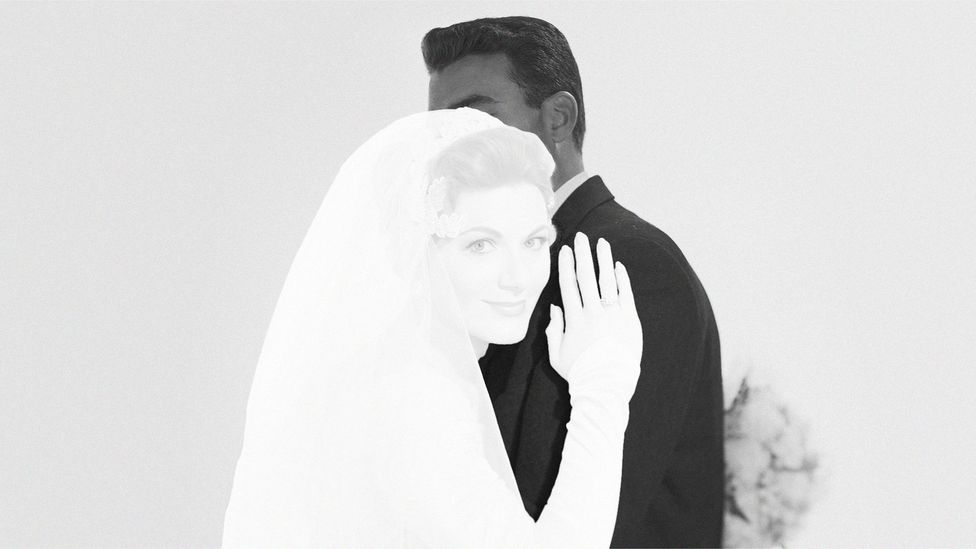
Old-fashioned romantics might have the wrong thought almost love. Potent behavior in true love could be blinding y'all to both the good and bad in your partner, with sometimes toxic results.
H
Have you e'er explained problems you accept with your partner to your friends, only for them to think they are non worth worrying virtually? Or have y'all seen a friend start a new romance with someone you think is completely unsuitable but they seem to go from forcefulness to strength?
Psychologists have establish two scales that influence how we start and maintain relationships.
One measures how much importance we put onto beginning impressions and early signs of compatibility, while the other measures how probable we are to piece of work through problems in relationships. They are called implicit theories of relationships (because we don't frequently talk almost them). We might intuitively think of ourselves as more or less likely to believe in true honey – but this is not something that nosotros openly talk over with others or are conscious of when we start new relationships.
Together, these two scales tin can tell us if nosotros are more likely to avoid talking nigh issues with our partners, look for faults where they might not exist, and 'ghost' our way out of relationships. Differences in these implicit attitudes can also help united states understand the reasons that others' romantic choices often seem inexplicable to the states.

Practice you believe in love at first sight? Or does it grow over time? (Credit: Getty Images)
To find out how you score, take the two quizzes below.
The Soul Mate scale
Reply the following questions on a calibration of ane to vii, where 1 is strongly disagree and seven is strongly agree.
1. Success in a romantic relationship is based more often than not on whether the people are "right" for each other.
2. There is a person out there who is perfect (or shut to perfect) for me.
three. In marriages, many people discover (vs. build) a deep intimate connection to their spouse.
4. Information technology is extremely of import that my spouse and I be passionately in love with each other later on nosotros are married.
5. I couldn't marry someone unless I was passionately in love with him or her.
6. There is no such affair as "Mr. Right" or "Ms. Right".
7. I expect my future husband or wife to be the most amazing person I have ever met.
8. People who are searching for a perfect match are wasting their fourth dimension.
9. The reason most marriages neglect is that people aren't correct for each other.
10. Bonds betwixt people are usually at that place before you meet them.
Now for scoring. First add your answers for i, two, 3, 4, 5, seven, nine and x. For questions 6 and 8, you demand to subtract each answer from the number 8 and utilize the new number as your answer for that question. For instance, if you answered "6", add a 2 to your total. Once you take your final total, divide by x to go your boilerplate for this scale.
The Work-it-out scale
Answer the post-obit questions on a scale of i to 7, where one is strongly disagree and seven is strongly agree.
1. Success in a romantic relationship is based mostly on how much people try to make the human relationship work.
2. In matrimony, effort is more than important than compatibility.
3. In a relationship, love grows (vs. beloved is found).
4. If people would just put in the endeavour, most marriages would work.
v. I could be happily married to well-nigh people, if they were reasonable.
half dozen. The reason near marriages fail is that people don't put in the effort.
7. How well y'all know someone depends on how long you take known him or her.
8. If I were to ally a random person, I would be satisfied.
ix. But over fourth dimension can you lot really learn near your partner.
To observe out your score, add together your answers and dissever by 9.
The questions in this quiz are taken from the Human relationship Theories Questionnaire used by Renae Franiuk, of Aurora University, Illinois, in her research into implicit theories and human relationship satisfaction and longevity. Franiuk uses 'Soulmate' and 'Work-it-out' to describe the 2 scales. Other researchers use 'destiny' and 'growth' to describe similar scales.

When relationships are struggling, people who score more highly on the 'growth' scales cope best (Credit: Getty Images)
When they realise that someone isn't their soul-mate, "destiny" believers may carelessness the human relationship and "ghost" their partner (Credit: Getty Images)

People with "destiny" beliefs about love tend not to talk over their relationship problems, which tin can atomic number 82 to growing resentments (Credit: Getty Images)
If they don't break up over an upshot – and still believe that they've found their true love – the destiny believer may merely overlook the event altogether. "Destiny believers tend to be more than forgiving of a partner and more probable to avoid a fight because they want to believe that this person is their soulmate," says Franiuk. That could exist positive for minor disagreements. "But if y'all're avoiding big conflict y'all terminate upwards staying with someone who is non good for you lot."
And the consequences tin be extremely serious. Destiny believers who take been together for longer are more likely to overlook issues, fooling themselves into thinking they are a better match because of the amount of time they have been together.
"We found that the longer destiny theorists stayed in relationships with someone who is non the correct person, the more than they reported violence," says Franiuk. "They downplay problematic relationships. They might requite someone a longer chance than other people might. Some might run across warning signs early and end the relationships, but there will be some who don't believe they are in a relationship with the right person but for economic reasons they remain and their personality traits make them more forgiving, which puts them in unsafe situations."
It would seem that romantic beliefs remain fixed over time. And so, once a destiny believer, always a destiny laic. "These theories are deeply held. Once people hit their 20s and 30s personalities are pretty stable. Like personality, relationship edifice is developed at an early age – children form these ideas based on the relationships around them," says Franiuk.

The "growth" beliefs well-nigh relationships tend to lead to better advice and greater long-term satisfaction. Problems can fifty-fifty make the couple stronger (Credit: Getty Images)
The two implicit theories do not need to be mutually exclusive, though. "Yous can have beliefs that relationships meliorate when couples work on them together, but [however believe] there is notwithstanding the 'right' person out there for you," says Freedman. "There are not going to be many people that think that no growth is possible. And we tin can withal alter the ways nosotros express those beliefs. We would expect that past experiences will shape how nosotros approach new relationships." And then but because you believe in romantic destiny, y'all might end the relationships in a more compassionate fashion, rather than ghosting, or you might make a more than conscious effort to work through problems rather than overlooking them.
They say the course of true love never did run smooth – just a greater awareness of our own romantic tendencies might just help usa navigate those bumps and turns forth the way.
--
William Park is @williamhpark on Twitter. Javier Hirschfeld created the artwork for this article.
Join 900,000+ Time to come fans by liking us on Facebook , or follow the states on Twitter or Instagram .
If you liked this story, sign up for the weekly bbc.com features newsletter , called "If You Only Read 6 Things This Week". A handpicked selection of stories from BBC Future, Civilization, Capital, and Travel, delivered to your inbox every Friday.
sisnerosseents1937.blogspot.com
Source: https://www.bbc.com/future/article/20190211-the-dark-side-of-believing-in-true-love
0 Response to "Does Youtr Future Mate Know Thinhd About You That Others Dont"
Post a Comment